
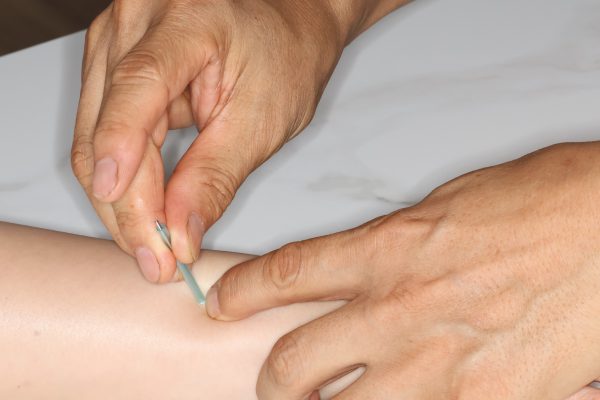
Acupuncture is a form of treatment that involves inserting very thin needles through a person’s skin at specific points on the body, to various depths.
What is acupuncture?
Acupuncture involves inserting needles into a patient’s body with the aim of balancing their energy and helping boost their wellbeing.
How does it work?
Traditional Chinese medicine consider health to be the result of a harmonious balance of the complementary extremes of “Yin” and “Yang” of the life force known as “Qi”. Illness is said to be the consequence of an imbalance of these forces.
Qi is said to flow through meridians, or pathways, in the human body. These meridians and energy flows are accessible through 350 acupuncture points in the body.
Inserting needles into these points with appropriate combinations is said to bring the energy flow back into proper balance.
Acupuncture points are seen as places where nerves, muscles, and connective tissue can be stimulated. The stimulation is believed to increase blood flow, while at the same time triggering the activity of the body’s natural painkillers.
Uses
The NCCIH note that acupuncture may help with symptoms of
- low back pain
- neck pain
- osteoarthritis
- knee pain
- headache and migraine
In 2003, the World Health Organization (WHO) listed a number of conditions in which they say acupuncture can be effective.
 These include:
- high and low blood pressure
- chemotherapy-induced nausea and vomiting
- some gastric conditions, including peptic ulcer
- painful periods
- dysentery
- allergic rhinitis
- facial pain
- morning sickness
- rheumatoid arthritis
- sprains
- tennis elbow
- sciatica
- dental pain
- reducing the risk of stroke
- inducing labor
Benefits
Acupuncture can be beneficial in that:
- Performed correctly, it is usually safe.
- There are usually very few side effects.
- It can be effectively combined with other treatments.
- It may help control some types of pain.
- It may help patients for whom pain medications are not suitable.
What to expect
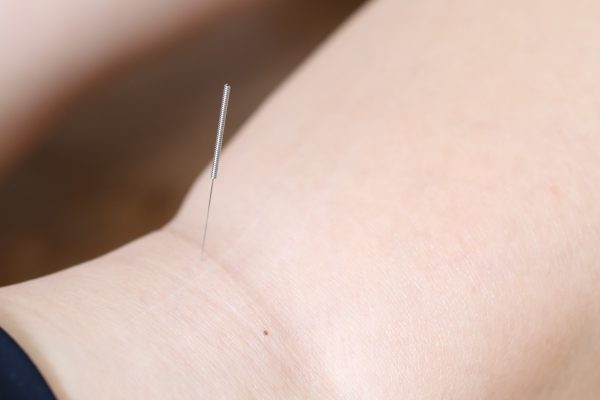
According to traditional Chinese medical theory, acupuncture points are located on meridians, through which vital energy runs. This energy is known as “Qi”.
An acupuncturist will examine the patient and assess their condition, insert one or more thin, sterile needles, and offer advice on self-care or other complementary therapies, such as Chinese herbs.
The patient will be asked to lie down on their back, front, or one side, depending on where the needles are to be inserted. The acupuncturist use single-use, disposable, sterile needles. As each needle is inserted, the patient may feel a very brief stinging or tingling sensation.
After the needle is inserted, there is occasionally a dull ache at the base of the needle that then subsides. Acupuncture is usually relatively painless.
Sometimes the needles are heated or stimulated with electricity after insertion.
The needles will stay in place for between 5 and 30 minutes.
The number of treatments needed depend on the individual. A person with a chronic condition may need one to two treatments a week over several months. An acute problem normally improves after 8 to 12 sessions.
 The application of the electric Microcurrent Pulse Stimulation(MPS) makes nerve or muscle activities be excited or suppressed. It provides an acupuncture-like deep sensory perception and much more power than normal acupuncture using needles. This modality was invented by combining an oriental acupuncture technique with western electrotherapy. This device has been used clinically for more than ten years and widely accepted in many applications including pain relief.
 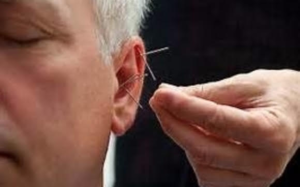 Auricular acupuncture uses the ear to release stress, promote body detoxification and enhance general feelings of relaxation and wellbeing.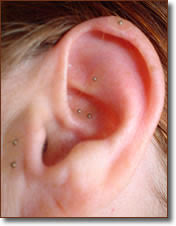
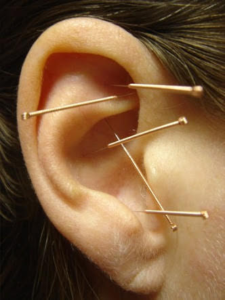 Auricular acupuncture has been used in the treatment of diseases for thousands of years. In the classic TCM text of Huang Di Nei Jing, which was compiled in around 500 B.C, the correlation between the auricle and the body was described; all six Yang meridians were directly connected to the auricle, whereas the six Yin meridians were indirectly connected to the ear by their corresponding yang meridian, respectively.